Have you ever wondered if the price you paid for your precious ornaments truly reflects their actual value? Making an informed decision is essential when you invest in high-value assets for your family or special occasions.
This gold jewellery buying guide is designed to help Indian consumers navigate the complex market with confidence. By checking seven critical factors—including purity, hallmarking, and transparent pricing—you can protect your hard-earned money.
We also cover craftsmanship, seller reliability, return policies, and necessary documentation. Comparing these details before you finalize a purchase helps you avoid hidden charges and unsuitable designs. Follow this essential checklist to ensure your next acquisition is both beautiful and financially sound.
Key Takeaways
- Verify the purity and hallmarking standards before finalizing any transaction.
- Always request a detailed invoice that breaks down making charges and taxes.
- Research the reputation of the retailer to ensure long-term service reliability.
- Understand the store’s exchange and return policies to avoid future disappointment.
- Keep all original documentation and certificates safe for future resale or insurance needs.
Gold jewellery buying guide: How to use this checklist
Navigating the gold market in India requires a clear strategy to ensure you get the best value for your money. By following these best gold jewelry tips, you can approach your purchase with confidence and clarity. A structured checklist acts as your roadmap, helping you avoid impulsive decisions while ensuring every gram of gold meets your expectations.
The seven purchase checks covered in this guide
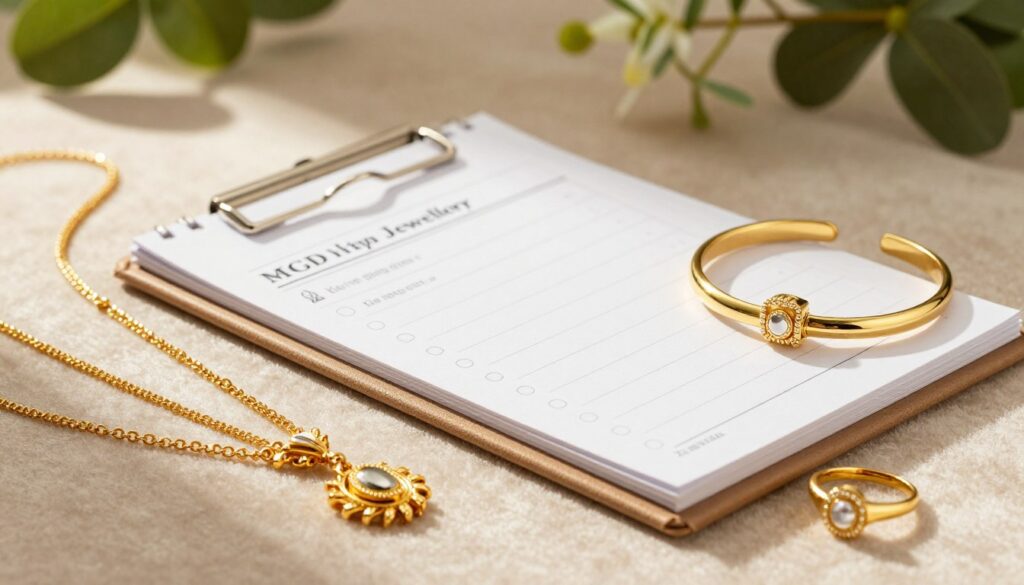
To make an informed decision, you must evaluate seven critical areas before finalizing any transaction. These checks cover the entire lifecycle of your purchase, from initial planning to long-term record-keeping. Consistency is key when verifying these elements to ensure your investment remains secure.
| Check Category | Primary Focus | Action Required |
|---|---|---|
| Budget & Goals | Financial Limits | Define total spend |
| Purity & Hallmark | Quality Assurance | Verify BIS standards |
| Price & Charges | Cost Breakdown | Review making fees |
| Policies & Records | Future Flexibility | Keep all invoices |
Why Indian buyers should verify details before paying
In the Indian market, the final price of an item is rarely just the cost of the gold itself. You are often paying for a combination of gold value, making charges, GST, and sometimes the weight of embedded gemstones. Failing to verify these individual components can lead to significant overpayment.
It is vital to confirm every detail before you hand over your payment. Once the transaction is complete, reversing or adjusting the terms becomes difficult. Utilizing these best gold jewelry tips ensures that you understand exactly what you are paying for, protecting your hard-earned money from hidden costs and misunderstandings.
Set your budget and define your purchase goals
Understanding your financial limits is essential for anyone learning how to buy gold jewellery effectively. Many buyers make the mistake of focusing only on the current market rate of gold, forgetting that the final bill often includes several additional layers of costs.

Separate the gold value from your total spending limit
When you set a budget, you must distinguish between the raw value of the metal and the total amount you are willing to spend. The market price of gold represents only the base cost of the material used in your item.
You should anticipate that the final price will be higher due to making charges, which cover the labor and artistry involved in crafting the piece. Always keep a buffer in your budget to account for these variables so you do not feel pressured at the checkout counter.
Decide whether you are buying for daily wear, gifting, or investment
Your primary goal dictates the type of gold you should prioritize. If you are buying for daily wear, focus on durability and comfort rather than intricate, fragile designs that might break easily.
For gifting, the sentimental value often outweighs the need for high-purity investment gold. If your goal is purely investment, you should prioritize high-purity items with minimal design work to ensure better liquidity later.
| Goal | Primary Focus | Recommended Purity |
|---|---|---|
| Daily Wear | Strength & Comfort | 18K or 22K |
| Gifting | Aesthetics & Design | 22K |
| Investment | Liquidity & Purity | 24K |
Plan for taxes, making charges, and future alterations
Beyond the price of the gold, you must account for the Goods and Services Tax (GST) applied to your purchase in India. Additionally, consider the long-term costs associated with your jewelry, such as potential resizing or professional cleaning.
If you choose a complex design, remember that future repairs might be more expensive or difficult to perform. Factoring these costs into your initial plan helps you maintain control over your finances.
How to avoid stretching your budget for unnecessary design features
It is easy to get distracted by elaborate patterns or heavy stone settings when you are learning how to buy gold jewellery. These features often carry high premiums that do not add to the intrinsic value of the gold itself.
If you want to maximize your investment, look for minimalist designs that offer elegance without excessive labor costs. By staying disciplined, you ensure that your purchase remains a sound financial decision rather than an impulsive expense.
Check gold purity and understand karat markings
Understanding the purity of your gold is the most critical step in any gold jewelry purchasing guide. While the yellow metal is prized for its luster, its physical properties change significantly based on the amount of pure gold present. Knowing these differences ensures you pay for exactly what you receive.
What 24K, 22K, 18K, and 14K gold mean
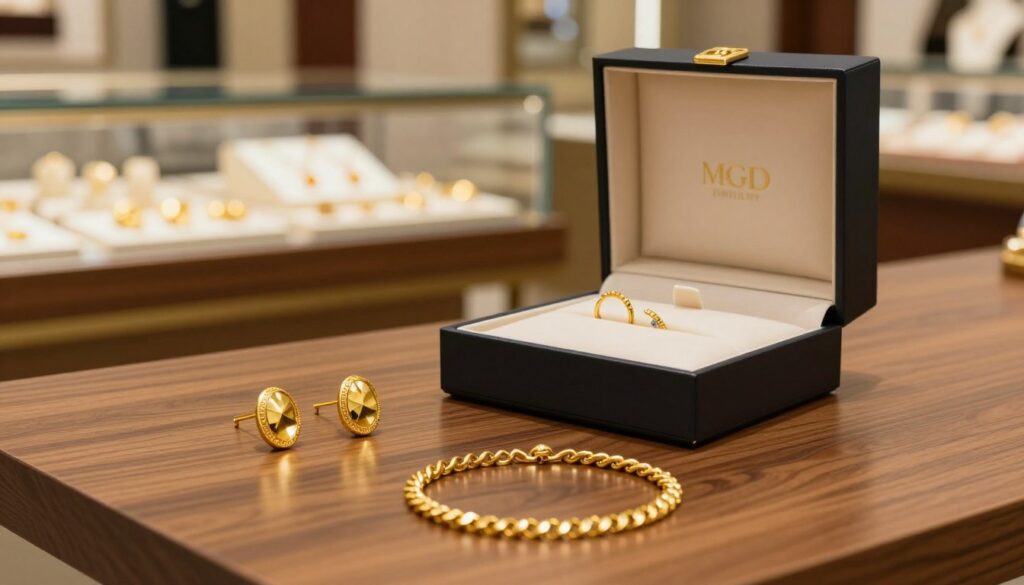
The term “karat” (K) measures the ratio of pure gold to other metals in an alloy. 24K gold is considered 99.9% pure, making it extremely soft and malleable. In contrast, 22K gold contains 22 parts gold and 2 parts other metals, while 18K and 14K contain even higher proportions of alloys like copper, silver, or zinc.
“Gold purity is not just a number; it is the primary indicator of the metal’s structural integrity and long-term value.”
Why higher purity is not always the best choice for every piece
Many buyers assume that 24K is always the superior choice, but this is a common misconception. Because pure gold is so soft, it can easily bend or lose its shape when crafted into intricate designs. If you want jewelry that holds gemstones securely or withstands daily wear, lower karat gold is often the smarter, more practical choice.
How alloy content affects color, strength, and durability
Alloys are added to gold to improve its hardness and scratch resistance. For instance, adding copper can give gold a warmer, reddish hue, while silver can make it appear paler. These metals provide the necessary strength to ensure your jewelry remains durable over many years of use.
How to compare purity markings on rings, chains, bangles, and earrings
You should apply the same standard of verification to every item, whether you are buying a heavy bangle or a delicate chain. Do not rely on the appearance of the gold alone, as plating can mimic the look of high-purity gold. Always check the stamp or hallmark on the inner surface of the piece to confirm its karat value.
Common purity terms you may see in Indian jewelry stores
When reviewing your gold jewelry purchasing guide, keep these common industry terms in mind to avoid confusion during your shopping experience.
| Karat Rating | Gold Content | Best Use Case |
|---|---|---|
| 24K | 99.9% | Investment coins and bars |
| 22K | 91.6% | Traditional Indian jewelry |
| 18K | 75.0% | Diamond and stone settings |
| 14K | 58.3% | Everyday wear and durability |
Verify BIS hallmarking and the HUID number
When you seek professional buying gold jewelry advice, the most critical step is confirming the authenticity of the metal. In India, the Bureau of Indian Standards (BIS) provides a reliable framework to ensure that the gold you purchase meets the declared purity standards.
What BIS hallmarking confirms about a gold item
A BIS hallmark is an official mark that guarantees the purity and fineness of the gold. It serves as a trusted indicator that the item has been tested and certified by an authorized laboratory. When you see this mark, you can be confident that the gold content matches the karatage stamped on the piece.
- BIS Logo: Confirms the item was hallmarked by a BIS-recognized center.
- Purity Grade: Indicates the specific karat value, such as 22K916 for 22-karat gold.
- Assay Center Mark: Identifies the specific laboratory that performed the testing.
How the six-digit HUID supports jewelry verification
The Hallmark Unique Identification (HUID) is a six-digit alphanumeric code laser-engraved on every hallmarked piece. This unique number acts as a digital fingerprint for your jewelry. It allows you to trace the item back to the specific jeweler and the assay center that certified it.
By using the official BIS mobile application or website, you can enter this code to verify the details of your purchase. This transparency ensures that you are not paying for high-purity gold while receiving a lower-quality alloy. Always prioritize pieces that feature this essential security feature.
Where to check hallmark details before completing payment
Before you finalize your transaction, take a moment to inspect the jewelry physically. Most reputable jewelers provide a magnifying glass so you can clearly see the hallmark stamps. You should cross-reference these physical markings with the details printed on your official invoice.
What to do when a hallmark is missing, unclear, or inconsistent
If you find that the hallmark is missing or the HUID is illegible, do not proceed with the purchase. An inconsistent hallmark is a major red flag that suggests the item may not meet the required quality standards. Always trust your instincts and ask the jeweler for clarification or request a different piece that is properly marked.
If the jeweler cannot provide a valid explanation or refuses to show the HUID verification, it is best to walk away. Following this buying gold jewelry advice will protect your hard-earned money and ensure you receive the quality you expect.
Break down the gold jewelry price before you buy
Before you finalize your purchase, you must learn how to dissect the various components that make up the total cost of gold jewelry. Understanding these details is one of the most important gold jewelry shopping tips you can follow to ensure you receive fair value for your money.
How the daily gold rate influences the final price
The foundation of any jewelry quote is the daily market rate for gold. Jewelers update this price based on international market fluctuations and local currency values.
Always verify the rate provided by the store against reliable financial news sources on the day of your purchase. Small differences in the base rate can lead to significant variations in the final amount you pay for heavy pieces.
How to read the net gold weight and stone weight
Your invoice should clearly distinguish between the weight of the gold and the weight of any added stones. The net gold weight represents the actual amount of precious metal you are purchasing.
Never accept a total weight that includes heavy stones without a breakdown. You should only pay for the gold content at the current market rate, while stones should be priced separately based on their quality and type.
Why gemstones and non-gold components can change the calculation
Gemstones, pearls, and enamel work are often added to enhance the beauty of a piece. However, these components do not hold the same intrinsic value as pure gold.
Be cautious if a jeweler charges you for the weight of the stones at the same rate as gold. Always ask for the specific deduction of stone weight from the total gross weight to avoid overpaying.
How GST applies to gold jewelry purchases in India
In India, the Goods and Services Tax (GST) is applied to the total value of the jewelry, including making charges. This tax is a mandatory government levy that you must account for in your budget.
Because GST is a percentage of the final bill, it can significantly impact the total cost. Always request a tax-inclusive quote to avoid surprises at the checkout counter.
A simple method for comparing two jewelry quotes
To make an informed decision, compare the final, tax-inclusive prices from different sellers. Use the following table to organize your comparison and ensure you are comparing apples to apples.
| Component | Jeweler A | Jeweler B |
|---|---|---|
| Net Gold Weight | Gram Value | Gram Value |
| Making Charges | Total Amount | Total Amount |
| GST Amount | Tax Value | Tax Value |
| Final Quote | Total Price | Total Price |
By breaking down these costs, you gain better control over your budget. Following these gold jewelry shopping tips will help you identify the best deal while avoiding hidden fees.
Compare making charges, wastage fees, and discounts
Navigating the complex world of making charges and wastage fees requires a sharp eye. Whether you are visiting a local showroom or purchasing gold jewelry online, these fees significantly influence your final bill. Understanding how these costs are structured helps you avoid overpaying for your favorite pieces.
What making charges pay for
Making charges represent the labor cost involved in transforming raw gold into a finished ornament. This fee covers the intricate work of designers, the skill of goldsmiths, and the final polishing process. Essentially, you are paying for the artistry and the time invested in creating the jewelry.
High-complexity designs, such as those with detailed filigree or heavy stone settings, naturally command higher making charges. Simple, machine-made chains or bangles usually carry lower fees because they require less manual labor. Always ask for a clear breakdown of these costs before you commit to a purchase.
How percentage-based and per-gram making charges differ
Jewelers typically use one of two methods to calculate labor costs. A percentage-based charge applies a fixed rate to the total value of the gold, while a per-gram charge adds a flat fee for every gram of gold used.
If you choose a heavy necklace, a percentage-based fee might result in a much higher total than a per-gram rate. Conversely, for lightweight items, a per-gram fee could be more expensive. Always calculate both methods to see which one offers a better deal for the specific item you want.
When wastage charges may be reasonable and when to question them
Wastage charges, often called melting loss, account for the gold lost during the cutting, soldering, and polishing stages. While some loss is inevitable in traditional hand-crafted jewelry, modern manufacturing techniques have significantly reduced this waste.
If a jeweler quotes a high wastage percentage for a machine-made piece, you should be skeptical. Request a detailed explanation for why the wastage is high. If the explanation feels vague, consider comparing the price with another reputable seller.
How promotional discounts can affect the actual value of a deal
Promotional offers can be tempting, but they often mask the true cost of the item. A store might advertise a significant discount on making charges while simultaneously increasing the wastage fee or the base gold rate. When purchasing gold jewelry online, look at the final invoice total rather than just the discount percentage.
Questions to ask before accepting a “zero making charge” offer
- Does the “zero making charge” apply to the entire weight of the piece?
- Are there hidden wastage or administrative fees added to the final price?
- Is the base gold rate higher than the standard market rate to compensate for the discount?
- Does this offer apply to all collections, or only to specific, older inventory?
By asking these questions, you ensure that you are getting genuine value. Remember that transparency is the hallmark of a trustworthy jeweler, whether you are shopping in person or purchasing gold jewelry online.
Evaluate craftsmanship, construction, and design suitability
Beyond the purity of gold, the physical construction of your jewelry determines its longevity and daily comfort. Applying these gold jewelry buying tips ensures that your chosen piece remains beautiful and functional for years to come.
Inspect clasps, soldering, prongs, links, and finishing
Start your inspection by checking the security of all moving parts. Ensure that clasps snap shut firmly and that safety catches are tight enough to prevent accidental loss.
Examine the soldering points on chains and bracelets for any signs of gaps or discoloration. Smooth, seamless joints indicate high-quality craftsmanship, while rough edges suggest a rushed manufacturing process.
If the piece features gemstones, gently nudge them to ensure the prongs are secure. A loose stone is a common issue that can lead to costly repairs or total loss if not addressed immediately.
Choose designs that match your lifestyle and wearing frequency
Consider how often you plan to wear the item before finalizing your purchase. Pieces intended for daily wear should feature robust designs that can withstand constant movement and friction.
Intricate, delicate designs are often better suited for occasional wear during festivals or weddings. Choosing the right style based on your lifestyle is one of the most practical gold jewelry buying tips for long-term satisfaction.
Check comfort, weight distribution, and sharp or exposed edges
Jewelry should feel natural and comfortable against your skin. Run your fingers over the piece to detect any sharp edges or burrs that might snag on clothing or irritate your skin.
Pay attention to how the weight is distributed across the item. A well-balanced piece will sit properly on your neck or wrist without twisting or pulling unevenly.
Understand how hollow, lightweight, and solid construction differ
Manufacturers often use hollow or lightweight construction to create larger, more affordable designs. While these pieces offer a grand appearance for less weight, they are more prone to denting and crushing.
Solid gold construction provides superior durability and is generally easier to repair. However, it comes at a higher price point due to the increased gold content required for the build.
Design details that can increase maintenance or repair costs
Complex designs with many crevices can trap dirt, oil, and soap, requiring frequent professional cleaning. Furthermore, items with thin, hollow links are notoriously difficult to repair if they break, often requiring a complete replacement of the damaged section.
| Construction Type | Durability | Repair Difficulty | Best Use Case |
|---|---|---|---|
| Solid Gold | High | Low | Daily wear |
| Hollow/Lightweight | Low | High | Occasional wear |
| Filigree/Intricate | Medium | High | Special events |
Choose a reputable seller for in-store or online purchases
Whether you shop in a physical showroom or browse online, your choice of seller dictates the quality of your investment. Following a reliable guide to buying gold jewellery ensures that you avoid common pitfalls and secure authentic pieces that hold their value over time.
What to look for in an established jeweler
An established jeweler typically carries a long-standing reputation within the local community. Look for retailers who prominently display their BIS hallmarking license and provide clear, printed documentation for every transaction. Consistency in quality is the hallmark of a brand that values its customers over quick profits.
How to assess seller transparency, reviews, and customer service
Transparency starts with how staff members explain the pricing breakdown. A reputable seller will openly discuss the current gold rate, making charges, and any applicable taxes without hesitation. You should also check online reviews and ask for recommendations from friends or family to gauge the level of customer service provided by the store.
What purchasing gold jewelry online should show before checkout
When you buy gold through digital platforms, the process must be as clear as a face-to-face interaction. Before you finalize your payment, the website must provide a comprehensive summary of your order. This digital guide to buying gold jewellery emphasizes that you should never proceed if the site lacks clear contact information or return policies.
Online product details you should verify in writing
Before clicking the checkout button, ensure the following details are explicitly stated in your order summary:
- Purity level (e.g., 22K/916 gold).
- Net gold weight and stone weight separately.
- Applicable GST and making charges.
- Shipping insurance and delivery timelines.
- Clear return and exchange conditions.
Warning signs of counterfeit listings, copied images, and unrealistic prices
Be wary of websites that use stock photos instead of real product images, as these often hide poor craftsmanship. If a price seems too good to be true compared to the daily market rate, it is likely a red flag for low-quality gold or a scam. Avoid any seller who pressures you to pay immediately or refuses to provide a detailed, itemized invoice before the transaction is complete.
Read return, exchange, buyback, and repair policies
Securing a favorable buyback agreement is a critical step in any gold jewellery buying guide. While you may intend to keep your jewelry forever, life circumstances often change, and having a clear exit strategy protects your financial interests. Understanding these terms early ensures you are not caught off guard by unexpected fees later.
Why a low buyback deduction matters for future flexibility
A low buyback deduction is essential because it preserves the intrinsic value of your investment. When you sell gold back to a jeweler, they typically deduct a percentage for melting and refining costs. If this percentage is too high, you lose a significant portion of your capital. Always ask for the specific buyback percentage in writing before you complete your transaction.
How exchange values may differ from cash buyback values
It is common for jewelers to offer better rates for exchanges than for cash refunds. An exchange often involves trading your old piece for a new one, which keeps the business within the store. Conversely, a cash buyback requires the jeweler to provide liquid funds, which often comes with stricter conditions or lower valuations. Always clarify if the quoted buyback rate applies to both cash and exchange scenarios.
What to confirm about resizing, repairs, cancellations, and refunds
Before you pay, you should obtain written confirmation regarding the store’s service policies. Ask specifically about the timeline for resizing rings or repairing broken clasps. You should also understand the window for cancellations and whether refunds are provided in cash or store credit. These are some of the best gold jewelry tips to ensure you remain in control of your purchase.
Policy terms that deserve clarification before purchase
- Resizing: Does the store offer free resizing for the first year?
- Repairs: Are minor repairs covered under a warranty or charged separately?
- Stones: How are non-gold components like gemstones valued during a buyback?
- Taxes: Will the GST paid at the time of purchase be factored into the buyback value?
Review the invoice and preserve every purchase record
A detailed invoice is your most important tool for protecting your gold jewelry investment. Following a proper gold jewelry purchasing guide ensures that you have the necessary documentation to prove ownership and value. Always verify that every financial and technical detail is recorded accurately before you leave the store.
Details your gold jewelry invoice should include
Your receipt must be more than just a total price tag. It should clearly itemize the net gold weight, the weight of any gemstones, and the specific purity of the metal. Ensure the document lists the making charges, applicable GST, and the final total amount paid.
| Invoice Item | Description | Importance |
|---|---|---|
| Net Gold Weight | Weight of pure gold | Basis for value |
| Making Charges | Labor and design fee | Cost transparency |
| GST | Government tax | Legal compliance |
| HUID Number | Unique identification | Authenticity proof |
How to match the invoice with the item and hallmark information
Once you receive your invoice, compare the printed details against the physical piece. Check that the HUID number on the document matches the laser-engraved mark on the jewelry. If the hallmark indicates 22K gold, your invoice must explicitly state the same purity level to avoid future disputes.
Why certificates, payment records, photographs, and packaging matter
Beyond the invoice, keep all original packaging and any provided authenticity certificates in a secure location. Taking clear photographs of your jewelry from multiple angles provides visual evidence of the item’s condition at the time of purchase. These records are vital when you learn how to buy gold jewellery effectively for long-term security.
How complete records support insurance, resale, and warranty claims
Maintaining a comprehensive file makes future transactions much smoother. If you ever need to claim insurance or request a repair, your documentation serves as official proof of the item’s specifications. Furthermore, having a clear paper trail significantly simplifies the process during a resale or exchange, ensuring you receive a fair valuation based on the original purchase data.
Match the jewelry to the wearer and occasion
When you learn how to buy gold jewellery, you quickly realize that the best choice depends heavily on where and how often you plan to wear it. A piece that looks stunning in a display case might not be the most functional choice for your specific lifestyle. By aligning your purchase with your daily habits, you ensure that your investment remains both beautiful and wearable for years to come.
Choosing practical pieces for everyday Indian wear
For daily use, prioritize durability and comfort. You should look for solid, well-constructed items that can withstand frequent handling, sweat, and routine cleaning. Simple chains, small studs, or lightweight bangles are excellent choices because they do not snag on clothing or get in the way of your tasks.
Expert buying gold jewelry advice suggests avoiding intricate, hollow designs for daily wear. These pieces are often fragile and can dent or break easily when exposed to the rigors of a busy schedule. Stick to designs with smooth edges to prevent skin irritation during long hours of wear.
Selecting jewelry for weddings, festivals, and formal occasions
Celebrations and formal events provide the perfect opportunity to showcase more elaborate, heavy, or ornate gold designs. These pieces often feature intricate filigree work, stone settings, or complex patterns that are meant to be seen and admired. Because you wear these items less frequently, you do not need to worry as much about the wear and tear associated with daily use.
When shopping for these special occasions, focus on the aesthetic impact and how the piece complements your traditional attire. Remember that these items often require careful storage and professional cleaning to maintain their luster. Investing in high-quality, statement jewelry for festivals ensures you have timeless pieces that can be passed down through generations.
Balancing skin sensitivity, metal alloys, and comfort
The composition of your gold jewelry significantly impacts how it feels against your skin. Pure gold is naturally hypoallergenic, but the alloys mixed with it—such as copper, silver, or nickel—can sometimes cause reactions for those with sensitive skin. Always verify the metal content if you have a history of skin irritation.
Higher karat gold, such as 22K, contains less alloy and is generally softer, making it more comfortable for some users. However, it is also more prone to scratches. Balancing the purity level with the intended use is essential for long-term satisfaction.
How personal style and long-term use should influence your choice
Your jewelry should be an extension of your personality. While following current trends is fun, consider whether a design will still appeal to you in a decade. Incorporating these gold jewelry shopping tips will help you build a collection that is both stylish and functional.
Think about the versatility of each piece before you finalize your purchase. A well-chosen item should transition seamlessly between different outfits and settings. By focusing on quality construction and timeless design, you ensure that your gold remains a cherished part of your wardrobe for a lifetime.
Recognize common mistakes and red flags
Protecting your investment starts with recognizing the red flags that often hide behind attractive marketing. Many buyers feel tempted by flashy advertisements, but these can mask significant financial risks. Staying alert ensures that your hard-earned money is spent on genuine value rather than marketing gimmicks.
Buying based only on a low advertised price
A low gold rate displayed in a window or on a website is often a lure to get you through the door. You must look beyond the base price to understand the total cost of the item. Often, sellers compensate for low rates by inflating making charges or adding hidden fees that are not immediately obvious.
Ignoring net weight, purity, or stone deductions
When purchasing gold jewelry online or in a store, you must verify the net weight of the gold itself. Many buyers fail to notice that the total weight includes heavy stones or non-gold components. Always ensure that the price is calculated based on the actual gold content, and that any deductions for stones are clearly stated on your invoice.
Relying on verbal promises instead of written policies
Never accept a salesperson’s word regarding buyback values, repair services, or exchange policies. If a promise is not documented on your official invoice or a signed policy document, it does not exist. Always insist on written confirmation to protect yourself against future disputes or changes in store management.
Skipping an independent comparison between sellers
One of the most effective gold jewelry buying tips is to compare quotes from at least two different jewelers. Different shops have varying structures for wastage and making charges, which can lead to significant price differences for the same design. Taking the time to compare ensures you are paying a fair market price for your jewelry.
| Common Mistake | Potential Risk | Best Practice |
|---|---|---|
| Focusing on base rate | Hidden fees | Check total invoice |
| Ignoring stone weight | Overpaying for gold | Verify net gold weight |
| Trusting verbal claims | No legal recourse | Get terms in writing |
| Single-store shopping | Paying premium prices | Compare multiple quotes |
Use a final pre-purchase checklist
Your journey to buying gold jewelry concludes with a critical final inspection. Following expert buying gold jewelry advice ensures that your hard-earned money is protected against errors or oversights. Before you sign any paperwork, take a deep breath and systematically review every aspect of the transaction.
Confirm purity, hallmarking, HUID, weight, and price
Start by verifying the physical hallmark on the item. Ensure the BIS logo, the purity grade, and the six-digit HUID are clearly visible and match your invoice exactly. Precision is your best defense against potential fraud or misrepresentation.
Check the net weight of the gold against the weight listed on the price tag. If the piece contains stones, confirm that the stone weight has been deducted from the total mass to avoid paying gold prices for non-gold materials.
Compare the complete quote with at least one alternative
Never commit to a purchase without comparing the final quote against another reputable jeweler. A guide to buying gold jewellery often emphasizes that market rates fluctuate, but making charges and wastage fees vary significantly between shops.
“The bitterness of poor quality remains long after the sweetness of a low price is forgotten.”
Inspect the piece and verify all documents before payment
Examine the jewelry under bright light to check for scratches, loose prongs, or weak soldering. Once you are satisfied with the physical condition, cross-reference the invoice details with the actual item. Ensure that the seller’s return and buyback policies are clearly printed on the receipt.
| Checklist Item | Verification Status | Action Required |
|---|---|---|
| BIS Hallmark | Verified | Check HUID code |
| Net Gold Weight | Confirmed | Subtract stone weight |
| Total Price | Calculated | Include GST and fees |
| Documentation | Complete | Keep original invoice |
Questions to answer before you leave the store or place an online order
- Does the HUID on the jewelry match the number printed on my invoice?
- Have I clearly understood the difference between the gross weight and the net gold weight?
- Are the making charges and taxes transparently itemized on the final bill?
- Do I have a copy of the store’s official buyback and exchange policy?
Conclusion
Securing high-quality gold requires a disciplined approach that goes beyond simple price comparisons. By applying the principles found in this gold jewellery buying guide, you protect your hard-earned money against common market pitfalls.
Your focus should remain on the total value rather than just the daily gold rate or a temporary discount. Always verify the BIS hallmark and HUID to ensure the purity of your purchase matches the seller’s claims. This level of scrutiny prevents future regrets when you decide to exchange or sell your items.
Maintain a complete record of your invoices and certificates for every transaction. These documents serve as your primary proof of ownership and quality. When you prioritize craftsmanship and transparent policies, you gain confidence in your investment.
Make this gold jewellery buying guide a permanent part of your shopping routine. Whether you visit a local store or browse online, your commitment to these steps ensures that every piece you acquire brings lasting satisfaction. Use this checklist to navigate the market with clarity and precision every single time.